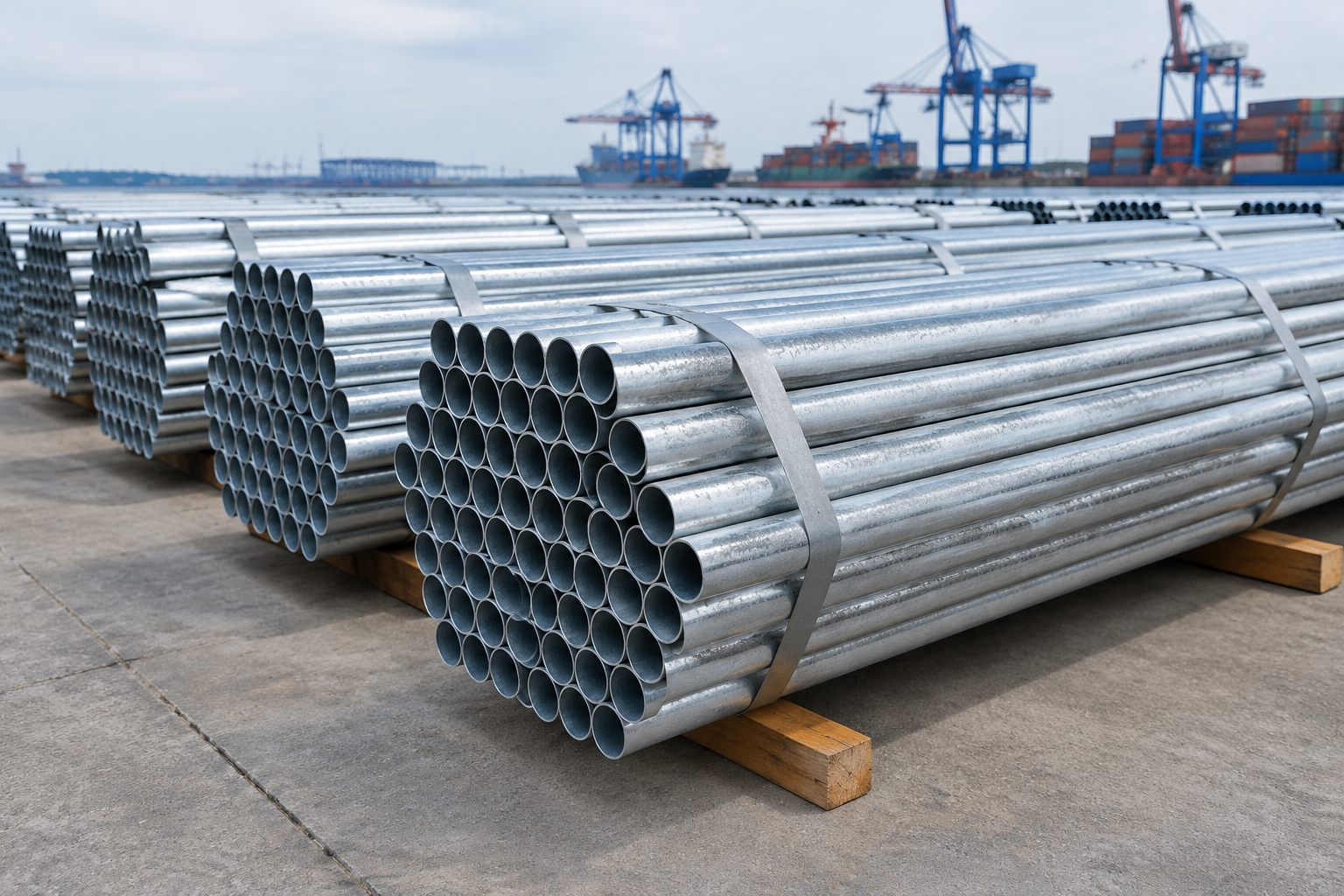
In commercial access engineering and industrial scaffolding procurement, steel tubes form the structural backbone of both traditional tube-and-coupler scaffolds and modular system standards. Whether supporting temporary facade access, industrial plant shoring, or falsework under bridge decks, loose scaffolding tubes must deliver predictable mechanical strength, uniform clamping geometry, and robust corrosion resistance under punishing site cycles.
In international trade—particularly across the Middle East, United Kingdom, Europe, and Southeast Asia—procurement specifications are overwhelmingly governed by two standards: EN 39 (Loose steel tubes for tube and coupler scaffolds) and BS 1139 (Metal scaffolding – Specification for steel tubes).
While these designations are frequently cited interchangeably in commercial tenders, subtle differences in designated wall thickness (Type 3.2 mm versus Type 4.0 mm), steel grade metallurgy (S235GT), dimensional tolerances, and hot-dip galvanizing mandates can create significant commercial risks, port clearance delays, and safety liabilities.
This technical buyer’s guide provides an exhaustive engineering analysis of EN 39 and BS 1139 steel scaffolding tube standards, examining dimensional tolerances, steel chemistry, structural load capacities, hot-dip galvanizing verification, and international shipping economics.
Key facts at a glance
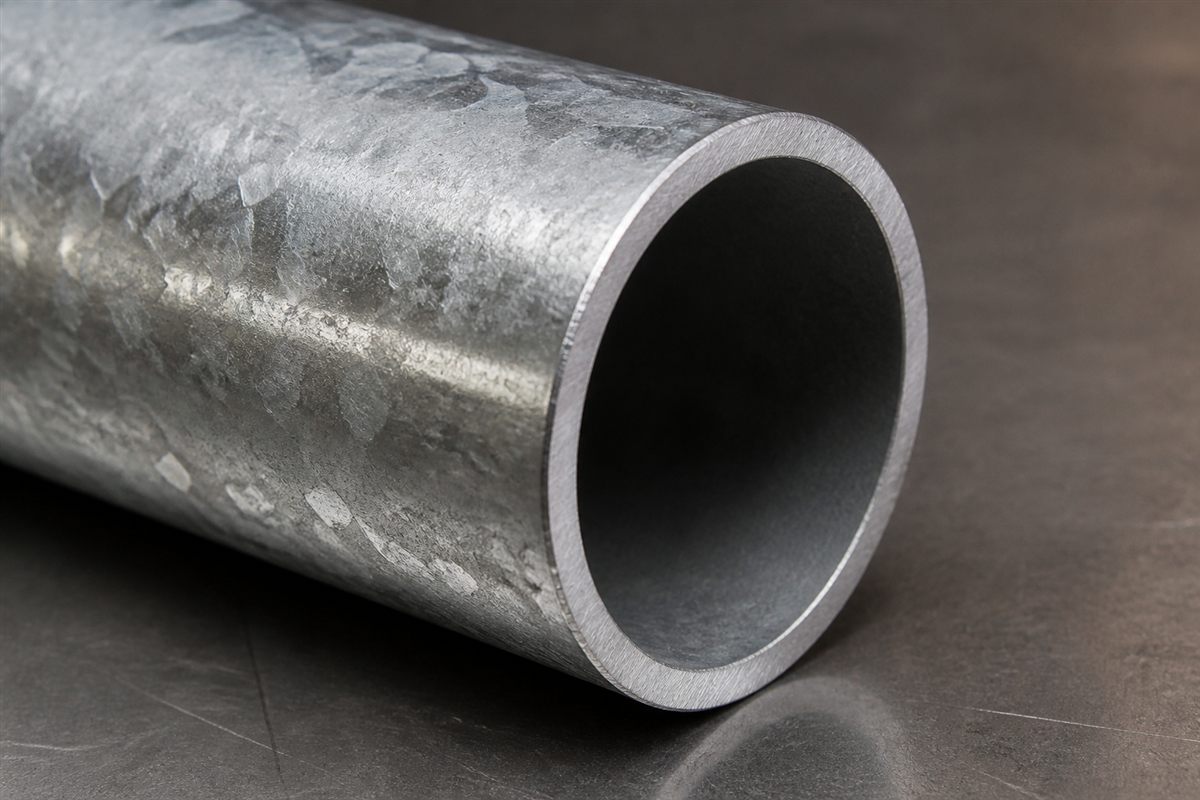
- Universal Outside Diameter: Both EN 39 and BS 1139 mandate an exact specified outside diameter of 48.3 mm (1.90 inches) with strict manufacturing tolerances (±0.5 mm for EN 39), ensuring global compatibility with all standard drop-forged and pressed steel scaffolding couplers.
- Wall thickness classifications: EN 39 recognizes two standard wall thicknesses: Type 3 (3.2 mm) and Type 4 (4.0 mm). Traditional BS 1139 Section 1.1 historically specified 4.0 mm (nominal), while BS 1139 Section 1.2 introduced higher-yield lightweight 3.2 mm tubing.
- Designated steel grade (S235GT): EN 39 specifies steel grade S235GT (“GT” denoting Scaffolding Tube), requiring a minimum upper yield strength (ReH) of 235 MPa (34,100 psi), tensile strength of 340 to 480 MPa, and minimum elongation after fracture (A) of 24%
- Weight and logistics differential: Type 4 (4.0 mm) tubes weigh approximately 4.37 kg/m, whereas Type 3 (3.2 mm) tubes weigh approximately 3.56 kg/m—delivering an immediate 18.5% weight reduction that reduces shipping container freight and on-site manual handling fatigue.
- Corrosion protection mandates: Both standards require effective surface protection. For hot-dip galvanized tubes, coating mass must meet EN ISO 1461, typically delivering an average coating thickness of 40 µm to 55 µm (minimum 280 g/m² to 390 g/m²) to resist marine and coastal industrial atmospheres.
The regulatory relationship: BS 1139 to EN 39
To understand international scaffolding tenders, buyers must first clarify the historical and regulatory relationship between British and European standards:
1. Traditional BS 1139: Part 1
Originally published by the British Standards Institution (BSI), BS 1139 was the foundational global standard for metal scaffolding. Part 1 governed steel scaffolding tubes:
- BS 1139: Section 1.1 (1990): Governed standard 4.0 mm wall thickness welded or seamless carbon steel tubes with minimum yield strength of 235 N/mm².
- BS 1139: Section 1.2 (1990): Introduced lightweight high-yield steel tubes (3.2 mm wall thickness) requiring a higher yield strength (ReH ≥ 325 N/mm²) to achieve equivalent bending and axial load capacities.
2. Harmonization under BS EN 39:2001
In 2001, the European Committee for Standardization (CEN) published EN 39:2001 (Loose steel tubes for tube and coupler scaffolds – Technical delivery conditions), which was subsequently adopted across all European national standard bodies (including BSI as BS EN 39).
BS EN 39 formally superseded BS 1139-1.1 for loose scaffolding tubes. Under the unified EN 39 specification:
- Type 3 (3.2 mm wall thickness) is codified for S235GT steel.
- Type 4 (4.0 mm wall thickness) is codified for S235GT steel.
As explored in our comprehensive evaluation of Ringlock vs Cuplock vs Kwikstage modular systems, system scaffolding standards also utilize 48.3 mm tubes conforming to these structural baseline tolerances.
Dimensional specifications and manufacturing tolerances
The interchangeability and structural safety of tube-and-coupler scaffolding depend strictly on dimensional uniformity. If a tube is out-of-round (ovalized) or exceeds outside diameter tolerances, scaffolding couplers cannot achieve full surface contact, leading to premature clamp slippage under load.
The following engineering reference table outlines the critical dimensions and allowable tolerances defined by EN 39:
| Dimensional Parameter | EN 39 Type 3 (3.2 mm) | EN 39 Type 4 (4.0 mm) | BS 1139 Traditional (4.0 mm) | Inspection Method & Tool |
|---|---|---|---|---|
| Specified Outside Diameter (OD) | 48.3 mm | 48.3 mm | 48.3 mm | Vernier caliper / micrometers |
| Outside Diameter Tolerance | ±0.5 mm (47.8 to 48.8 mm) | ±0.5 mm (47.8 to 48.8 mm) | ±0.5 mm | Multi-point radial check |
| Specified Wall Thickness (t) | 3.2 mm | 4.0 mm | 4.0 mm | Ultrasonic thickness gauge |
| Wall Thickness Tolerance | -10.0% (max allowed minus) | -10.0% (max allowed minus) | -10.0% | Ultrasonic gauge / micrometer |
| Nominal Mass per Meter | 3.56 kg/m (2.39 lb/ft) | 4.37 kg/m (2.94 lb/ft) | 4.37 kg/m (2.94 lb/ft) | Calibrated weighbridge |
| Mass Tolerance per Single Tube | -7.5% | -7.5% | -7.5% | Single tube scale check |
| Mass Tolerance per Batch (≥ 10t) | ±5.0% | ±5.0% | ±4.0% | Weighbridge batch ticket |
| Straightness (Deviation from line) | ≤ 1.5 mm per 1.0 m | ≤ 1.5 mm per 1.0 m | ≤ 1.5 mm per 1.0 m | Taut wire / feeler gauge |
| Maximum Total Straightness Bow | ≤ 0.002 × Length | ≤ 0.002 × Length | ≤ 0.002 × Length | Full length span check |
| Ovality (Out of Roundness) | ≤ 0.5 mm difference | ≤ 0.5 mm difference | ≤ 0.5 mm difference | Maximum OD minus Minimum OD |
| Cut End Squareness | Max 1.0 mm out of square | Max 1.0 mm out of square | Max 1.0 mm out of square | Square gauge / visual check |
Why the 48.3 mm outside diameter is non-negotiable
Scaffolding drop-forged couplers (such as right-angle double couplers and swivel couplers conforming to EN 74-1 / BS 1139-2.1) are precision-forged to wrap exactly around a 48.3 mm circumference.
- If mill tube OD exceeds 48.8 mm, couplers will bind and distort during bolt tightening.
- If mill tube OD falls below 47.8 mm, the coupler cap bottoms out on its hinge collar before exerting rated clamping torque, causing catastrophic clamp slippage under working loads.
Steel grade metallurgy and mechanical performance (S235GT)
EN 39 mandates steel manufactured via the electric arc furnace (EAF) or basic oxygen furnace (BOF) route, fully deoxidized and micro-alloyed to provide reliable ductility under severe plastic deformation.
1. Chemical composition limits (Cast Analysis)
- Carbon (C): ≤ 0.20% maximum (ensuring excellent cold bend ductility and on-site field weldability without preheating).
- Silicon (Si): ≤ 0.30% maximum (controlled specifically to optimize hot-dip galvanizing reaction kinetics).
- Manganese (Mn): ≤ 1.40% maximum (providing solid solution strengthening).
- Phosphorus (P): ≤ 0.040% maximum (preventing cold embrittlement and low-temperature impact fractures).
- Sulfur (S): ≤ 0.045% maximum (reducing non-metallic inclusions and hot tearing).
- Nitrogen (N): ≤ 0.009% maximum (inhibiting strain aging).
2. Mechanical testing parameters
Every production batch must be certified on an EN 10204 Type 3.1 Mill Test Certificate covering:
- Upper Yield Strength (ReH): Minimum 235 MPa (235 N/mm²)
- Tensile Strength (Rm): 340 to 480 MPa (340 to 480 N/mm²)
- Elongation after fracture (A): Minimum 24%
- Flattening test: Tube rings must withstand compression to 67% of original outside diameter without initiating cracks in parent metal, and down to 33% along the weld seam line without separation.
Hot-dip galvanizing and corrosion protection standards
Scaffolding tubes spend their entire operating lifespan outdoors, exposed to high humidity, rain, concrete splatter, and coastal saline atmospheres. Surface protection is the primary factor determining whether a tube inventory lasts 3 years or 20 years.
1. Hot-Dip Galvanizing (HDG) per EN ISO 1461
Hot-dip galvanizing involves immersing thoroughly pickled, fluxed steel tubes in a molten zinc bath held at 450°C (842°F). This produces a metallurgically bonded multi-layered zinc-iron alloy coating:
- Coating thickness requirement: EN 39 mandates a minimum local coating thickness of 28 µm (200 g/m²) and a minimum average coating thickness of 40 µm (280 g/m²).
- Heavy industrial / coastal grade: For Middle East marine projects and offshore oil platforms, buyers typically specify enhanced heavy galvanizing with an average thickness of 55 µm to 65 µm (390 g/m² to 460 g/m²).
2. Pre-galvanized vs Post-Hot-Dip Galvanized
- Pre-galvanized tubes: Formed from continuously zinc-coated steel coils. Total zinc mass is typically only 100–180 g/m² (14–25 µm). Suitable only for light indoor or temporary duties.
- Post-Hot-Dip Galvanized tubes: Fabricated as raw black tubes and then batch-dipped in molten zinc. Both inner and outer surfaces receive a continuous, heavy alloy coating that self-heals minor site scrapes via sacrificial galvanic action.
Structural load capacity: Type 3 (3.2 mm) vs Type 4 (4.0 mm)
The choice between 3.2 mm and 4.0 mm wall thickness directly dictates allowable scaffolding tower heights and standard vertical load ratings:
1. Cross-sectional area and moment of inertia
- Type 3 (3.2 mm): Cross-sectional area = 4.53 cm²; Moment of inertia = 11.60 cm⁴; Section modulus = 4.80 cm³
- Type 4 (4.0 mm): Cross-sectional area = 5.57 cm²; Moment of inertia = 13.80 cm⁴; Section modulus = 5.70 cm³
2. Axial compression and buckling strength
Because Type 4 (4.0 mm) features a 23% larger steel cross-sectional area and 19% higher section modulus, it delivers substantially higher permissible axial buckling loads (Pperm) over unsupported vertical standard heights under BS 5973 / EN 12811 design tables:
At a typical standard lift height of 2.0 meters (Leff = 2.0 m):
- Type 4 (4.0 mm) standard carries an allowable axial working load of approximately 41.2 kN.
- Type 3 (3.2 mm) standard carries an allowable axial working load of approximately 33.5 kN.
Engineering takeaway: For heavy industrial falsework, heavy masonry loading, or shoring towers exceeding 30 meters, Type 4 (4.0 mm) is mandatory. For general perimeter access, painting scaffolds, and suspended light cradles, Type 3 (3.2 mm) provides ample load margin at significantly reduced structural weight.
Logistics, container packing, and tonnage economics
Scaffolding tubes are manufactured in standard lengths—typically 6.0 meters (20 feet), with supplementary lengths of 4.8 m, 3.9 m, 3.0 m, 2.0 m, and 1.0 m for internal bracing and platform transoms.
Ocean container packing comparison (40-Foot High-Cube Container)
A standard 40HQ container has an internal length of 12.03 m and a maximum gross cargo payload limit of approximately 26.5 metric tons:
- Type 4 (4.0 mm) Tubes (4.37 kg/m): A single 6.0 m length weighs 26.22 kg. Maximum container payload allows approximately 1,010 lengths (6,060 meters). Total weight: 26.48 metric tons.
- Type 3 (3.2 mm) Tubes (3.56 kg/m): A single 6.0 m length weighs 21.36 kg. Maximum container payload allows approximately 1,240 lengths (7,440 meters). Total weight: 26.49 metric tons (Transports 22.8% more linear meters of scaffolding per shipment).
Identification, marking, and on-site receipt inspection
EN 39 Section 11 establishes mandatory marking requirements to ensure traceability and prevent substandard non-compliant tubing from entering active construction sites.
1. Mandatory tube continuous stenciling or embossing
Every EN 39 compliant tube must be continuously embossed or indelibly stenciled at intervals not exceeding 1.0 meter with:
- The standard number:
EN 39 - The manufacturer’s name or registered trademark
- The tube type:
3(for 3.2 mm) or4(for 4.0 mm) - The designated steel grade:
S235GT
2. 5-Step Receipt Quality Inspection Checklist
- Verify MTC documentation: Ensure the EN 10204 Type 3.1 certificate references heat numbers matching physical bundle tags, confirming yield strength ≥ 235 MPa, elongation ≥ 24%, and carbon ≤ 0.20%.
- Measure outside diameter (OD): Multi-point vernier caliper check across each bundle must fall strictly within 47.8 mm to 48.8 mm.
- Verify wall thickness: Measure wall thickness at tube cut ends; Type 4 must not measure below 3.60 mm (-10% tolerance limit), and Type 3 must not measure below 2.88 mm.
- Check zinc coating thickness: Magnetic gauge reading per ISO 2178 should exceed 40 µm (or 55 µm if specified) with zero bare spots.
- Inspect end cut and deburring: Verify that tube ends are cut square (within 1.0 mm) and fully deburred.
FAQ
Can EN 39 scaffolding tubes be used with traditional BS 1139 couplers?
Yes. Both EN 39 and BS 1139 mandate an identical 48.3 mm outside diameter. Standard right-angle couplers, swivel couplers, and sleeve couplers conforming to BS 1139 Part 2 / EN 74-1 fit EN 39 tubes with 100% mechanical compatibility.
What is the difference between EN 39 Type 3 and Type 4?
Type 3 specifies a nominal wall thickness of 3.2 mm (weight: 3.56 kg/m), whereas Type 4 specifies 4.0 mm (weight: 4.37 kg/m). Type 4 carries higher axial load capacities for heavy shoring, while Type 3 reduces structural deadweight and freight costs for facade access.
Why is S235GT steel used instead of higher strength S355 steel in loose tubes?
S235GT provides an optimal balance of structural strength and superior ductility (24% elongation). If overloaded or impacted on site, S235GT tubes deform plastically rather than fracturing suddenly, giving workers visible warning of structural distress.
How long do hot-dip galvanized scaffolding tubes last?
In standard C3 urban and rural environments, an EN ISO 1461 hot-dip galvanized coating (45–55 µm) delivers a maintenance-free service life of 15 to 25 years. In aggressive C5 marine/coastal industrial atmospheres, service life is typically 8 to 12 years.
Can EN 39 tubes be welded on site?
With a low carbon content (≤ 0.20%) and carbon equivalent (CEV ≤ 0.40%), S235GT steel possesses excellent weldability using standard MMA or MIG procedures without preheating. However, localized zinc coating must be restored with zinc-rich compound.
What is the standard length of scaffolding tubes for export?
The global standard length is 6.0 meters (19.68 feet), designed to maximize payload inside 20-foot and 40-foot ocean shipping containers. Common sub-lengths include 3.0 m, 3.9 m, and 4.8 m.
Is pre-galvanized scaffolding tube acceptable under EN 39?
Standard practice for commercial construction access mandates full post-hot-dip galvanizing (hot-dipped after tube manufacturing) to protect internal bore surfaces and weld seams.
How do I calculate how many 6m tubes fit in a 40HQ container?
Divide the container maximum net payload (typically 26,500 kg) by the weight of a single 6m tube (21.36 kg for Type 3; 26.22 kg for Type 4). This yields approximately 1,240 lengths of Type 3 or 1,010 lengths of Type 4.
Bottom line
- Specify EN 39 Type 4 (4.0 mm) for heavy industrial construction, power plant maintenance, refinery falsework, and high-load shoring towers where maximum axial load capacity (41.2 kN at 2m lifts) is paramount.
- Specify EN 39 Type 3 (3.2 mm) for commercial building facade access, painter’s scaffolds, and international rental inventories where saving 18.5% in structural deadweight significantly reduces freight costs and daily erection labor.
- Always require hot-dip galvanizing to EN ISO 1461 and an EN 10204 Type 3.1 Mill Test Certificate to guarantee S235GT mechanical ductility and prevent dangerous site corrosion.
- Inspect delivered tubes to verify the continuous 1-meter indelible embossing (
EN 39 - TYPE - S235GT) and check outside diameter tolerances strictly against the 47.8 mm to 48.8 mm limit before accepting stock into inventory.
For more technical guides on modular scaffolding components, structural capacity calculations, and access engineering standards, explore our complete library in the Scaffolding & Structural Systems category.